

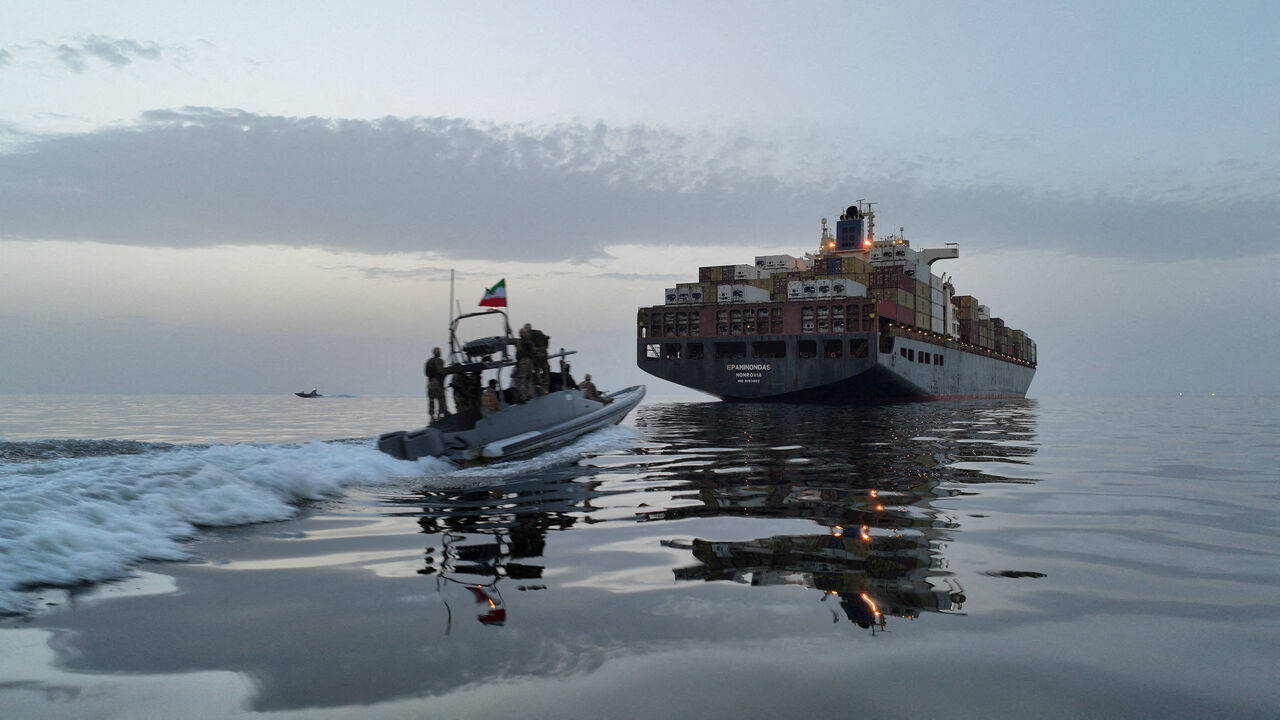
Through one of the world’s most perilous maritime chokepoints, a fragile trickle of energy has finally broken free. Recent ship-tracking data reveals that three liquefied natural gas (LNG) tankers—heading to Pakistan, China, and India—alongside a massive crude supertanker, have successfully navigated the Strait of Hormuz. For energy markets held in suspense, the movement represents a rare sign of life in a corridor that typically handles a fifth of the global supply of oil and LNG, but has been crippled since the outbreak of war in late February.
Among those cutting through the tense waters is the Fuwairit, a Bahamas-flagged LNG tanker owned by Japan’s Mitsui O.S.K. Lines (MOL). After loading its cargo at Qatar’s Ras Laffan port in late March, the vessel crossed the strait on Monday and is scheduled to discharge in Pakistan. While shipping operators remain tight-lipped about the perilous journeys, the silence speaks to the delicate nature of these voyages. When approached regarding the vessel’s movement, a representative for Mitsui O.S.K. Lines simply stated, “We decline to comment on specific operational routes at this time.”
Joining the Fuwairit is the QatarEnergy-owned Al Rayyan, which loaded at Ras Laffan and re-emerged outside the strait between Iran and Oman after disappearing from tracking systems in late May. It is now bound for China with a late-June arrival date. Similarly, the Al Hamra, managed by the Abu Dhabi National Oil Company (ADNOC), reappeared off the coast of India after weeks off the grid. As commercial fleets attempt to adapt to the security crisis, energy firms have maintained strict operational secrecy, with ADNOC and QatarEnergy offering no immediate comment on the safe transit of their vessels.
Perhaps the most dramatic release is that of the Eagle Verona, a Singaporean-flagged Very Large Crude Carrier (VLCC) carrying nearly two million barrels of Iraqi Basrah crude. Chartered by Sinopec’s trading arm, Unipec, the vessel had loaded its cargo in late February and remained stranded for nearly three months before finally exiting the waterway on Saturday. Its release was part of a delicate diplomatic push. According to sources familiar with the maritime negotiations, “Malaysia had actively sought permission for seven trapped vessels to transit the waterway.” Five of those ships, including the Eagle Verona, have now successfully exited, though two remain stuck inside the Gulf.
Despite these successful transits, the wider picture along the Persian Gulf remains grim. Prior to the conflict, shipping traffic through the Strait of Hormuz averaged between 125 and 140 daily passages; today, only a handful of Very Large Crude Carriers have managed to make the trip this month under strict transit routes designated by regional authorities. Behind the macro-level energy logistics lies a deep human crisis: an estimated 20,000 seafarers remain stranded aboard hundreds of commercial ships pinned down inside the Gulf, waiting for safe passage out of the conflict zone.
