

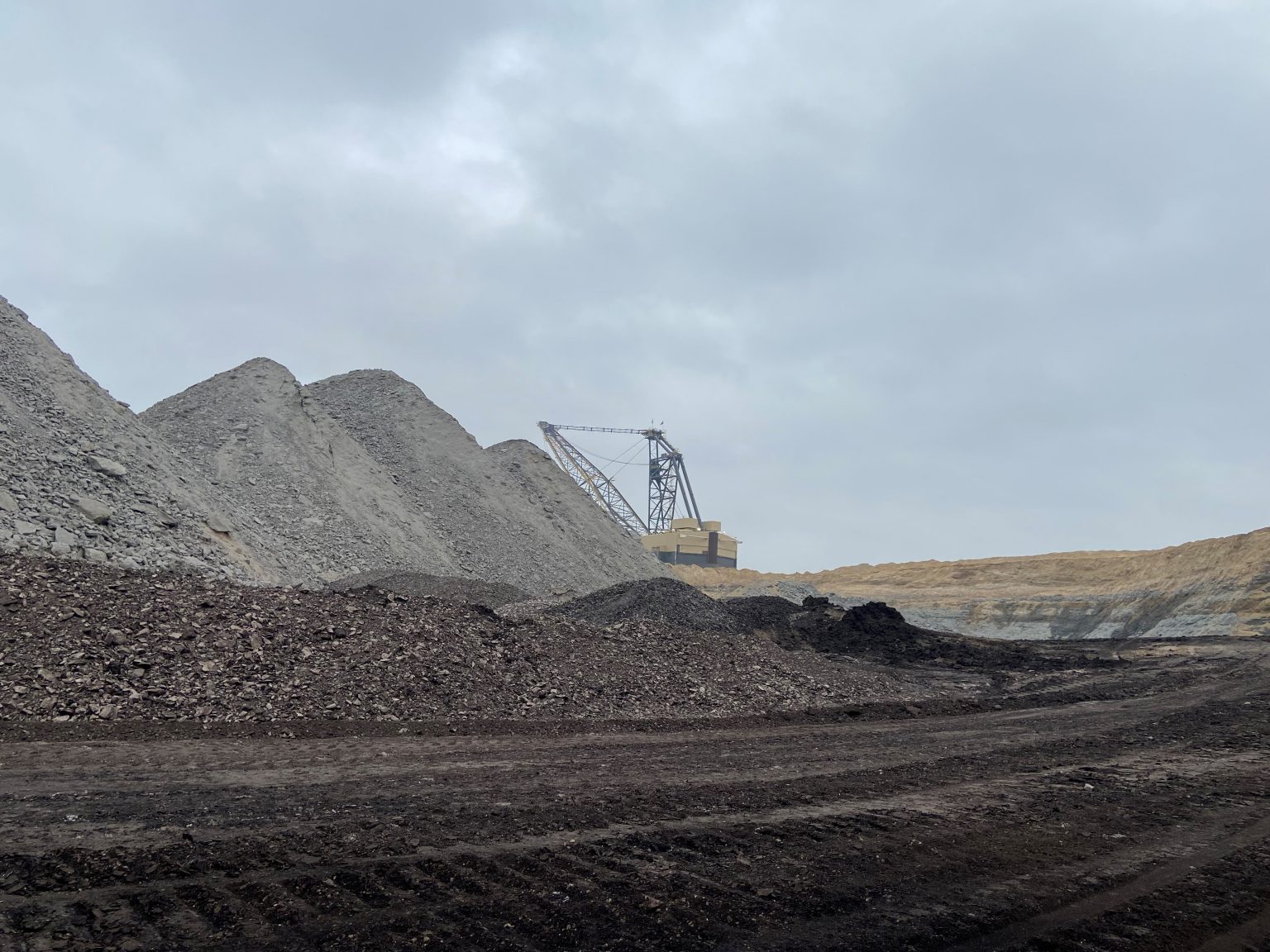
Coal deposits and fly-ash landfills along the U.S. Gulf Coast contain more than $187 billion worth of rare earth elements, according to new research from the University of Texas at Austin, offering a potential domestic source for materials critical to modern electronics, batteries, and defense applications.
The findings, published in the International Journal of Coal Science & Technology, highlight an unconventional supply route as Washington seeks to reduce reliance on foreign supply chains. The U.S. currently relies on imports for about 70% of its rare earth elements, predominantly from China.
However, the report cautions that the economics of standalone extraction remain challenging. Broken down by volume, the rare earth concentration yields less than $5 per ton for both raw coal and coal ash. Researchers conclude that recovery is viable primarily as a secondary revenue stream for companies already mining, processing, or recycling coal byproducts.
“You need to find some way to use byproducts to make it worthwhile,” said Brent Elliott, study co-author and research associate professor at the Bureau of Economic Geology at UT Austin. “If you’re already mining the coal, the rare earth elements could be a side hustle.”
The Department of Energy-funded study analyzed 118 samples across 13 mines and multiple disposal sites in Texas, Louisiana, Mississippi, Tennessee, and Kentucky. It estimated that 58 billion metric tons of Gulf Coast lignite coal harbor roughly $186 billion in rare earths, assuming a 70% extraction yield. An additional 258 million tons of stockpiled coal ash contain about $1.2 billion in rare earths at a 30% recovery rate.
The majority of the minerals identified are key components in permanent magnets used across high-tech industries and electric vehicles. While raw coal in the region contains fewer critical minerals overall than the Earth’s upper crust, its organic structure allows about 70% of the elements to be leached out using mild, low-cost acids.
Conversely, coal ash features a higher concentration of rare earths,roughly four times that of raw coal, because burning concentrates the minerals. However, extracting elements from ash requires harsher, more expensive chemical processes because the minerals are bound in a solid matrix.
“This is an advantageous aspect of having critical minerals inside that coal material,” said Bridget Scanlon, lead author and research professor at the bureau. “There are all sorts of repurposing and recycling possibilities.”
Scanlon emphasized that commercial viability will depend heavily on processing costs rather than sheer volume. “So, there’s a tradeoff there,” she said. “It’s not just the concentration of rare earth elements, it’s the extractability and the processing, all that sort of thing.”
Industry experts noted that extracting value from waste streams requires capturing multiple commercial outputs rather than targeting individual elements in isolation.
“There needs to be the recognition that you have to get more out of it as a product, not just a little range of elements that are getting the attention,” said James Hower, a study co-author and research professor at the University of Kentucky. “The analogy to this is really the meat packing industry. You’re not selling a little bit of meat. You’re selling the whole hog.”
